Medfield Was Just Ranked #9 Among the Wealthiest Communities in Massachusetts. What Does That Say About the Real Estate Market?
Medfield's income ranking caught my attention. But after nearly 20 years selling real estate here and throughout MetroWest, I think the more interesting story is what it tells us about the housing market — and why more buyers with substantial purchasing power are choosing Medfield.
By Evan Walsh The Walsh Team | William Raveis Real Estate |

I saw a statistic recently that caught my attention.
Medfield was just ranked the #9 wealthiest community in Massachusetts.
According to Massachusetts-Demographics.com's 2026 ranking, Medfield has an average household income of $300,167 and a median household income of $235,800.
That puts Medfield in some pretty impressive company.
The eight communities ahead of it are Weston, Dover, Wellesley, Carlisle, Sherborn, Lexington, Winchester and Cohasset.
Medfield ranks ahead of Sudbury, Hopkinton, Wayland, Needham, Concord and Westwood.
I've been selling real estate in Medfield and throughout MetroWest for about 20 years, and when I saw the ranking, my first thought wasn't really about the income number.
What does this tell us about the Medfield real estate market?
Because I think there's a much more interesting story underneath the ranking.
The data suggests something bigger is happening. Higher-income buyers are increasingly choosing Medfield for its combination of lifestyle, community, schools, space and relative value compared with many of the traditional luxury markets closer to Boston.
Medfield Doesn't Look Like a Traditional "Wealthy Town"
When people think about some of the wealthiest communities in Massachusetts, they tend to picture large estates, new construction, enormous lots and a deep luxury housing market.
That's certainly true in places like Weston, Dover and Wellesley.
Medfield is different.
We have beautiful homes here, but we don't have nearly the same concentration of ultra-high-end properties.
And yet the people living here have some of the highest household incomes in Massachusetts.
I think that tells us something important.
Wealth and home price aren't necessarily the same thing.
And increasingly, buyers with substantial purchasing power are choosing Medfield.
The Numbers Show a Market That Has Changed
I went back through the MLS data because I wanted to see if what I've been experiencing in the field showed up in the numbers.
It does.
In 2020, Medfield had 158 home sales with a median sale price of $790,000.
So far in 2026, the median is approximately $1.181 million.
That's an increase of nearly 50% in six years.
But the upper end of the market is even more interesting.
That's 21 public sales above $2 million since 2020, with 18 of those 21 occurring since the beginning of 2024.
And here's the part that really caught my attention:
Only two of those 21 homes were new construction.
This isn't simply builders constructing more expensive houses and pushing the top of the market higher.
Buyers are paying significantly more for Medfield's existing housing stock.
That tells me something has changed.
So What's Driving It?
From my perspective, there isn't one answer.
It's a combination of lifestyle, community and value.
I've worked with luxury buyers throughout MetroWest for two decades, including in Wellesley, Dover, Needham, Weston, Westwood, Sherborn and Medfield.
I also grew up in Dover.
I love Dover, but when I chose where I wanted to live, I wanted a little more in terms of everyday lifestyle and things to do.
That's something Medfield does particularly well.
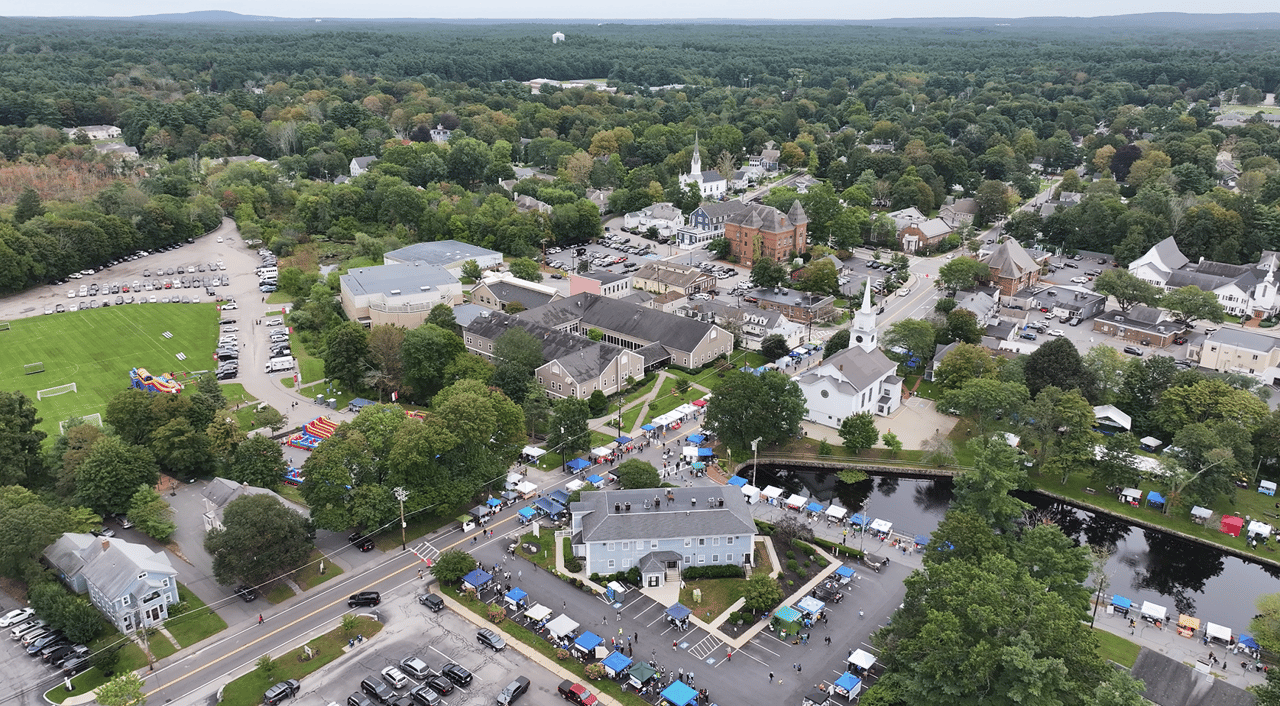
We have a real town center. Restaurants and local businesses. Community events. Youth sports. Recreation. Conservation land. A strong school system. And there's still a genuine small-town feel.
For 2026, Niche ranks Medfield Public Schools #23 among all Massachusetts school districts and #4 in the state for districts with the best teachers.
Those things matter to buyers.
Medfield Offers a Lot of Lifestyle for the Money
I see quite a bit of buyer traffic coming from Needham.
That makes sense to me.
There are similarities between the two communities, but Medfield has a smaller-town feel, lot sizes tend to be a little larger, and the difference in what your money can buy can be significant.
The same thing happens when buyers compare Medfield with other higher-priced communities closer to Boston.
At the upper end of the market, that difference can become dramatic.
I'm talking about the entire package.
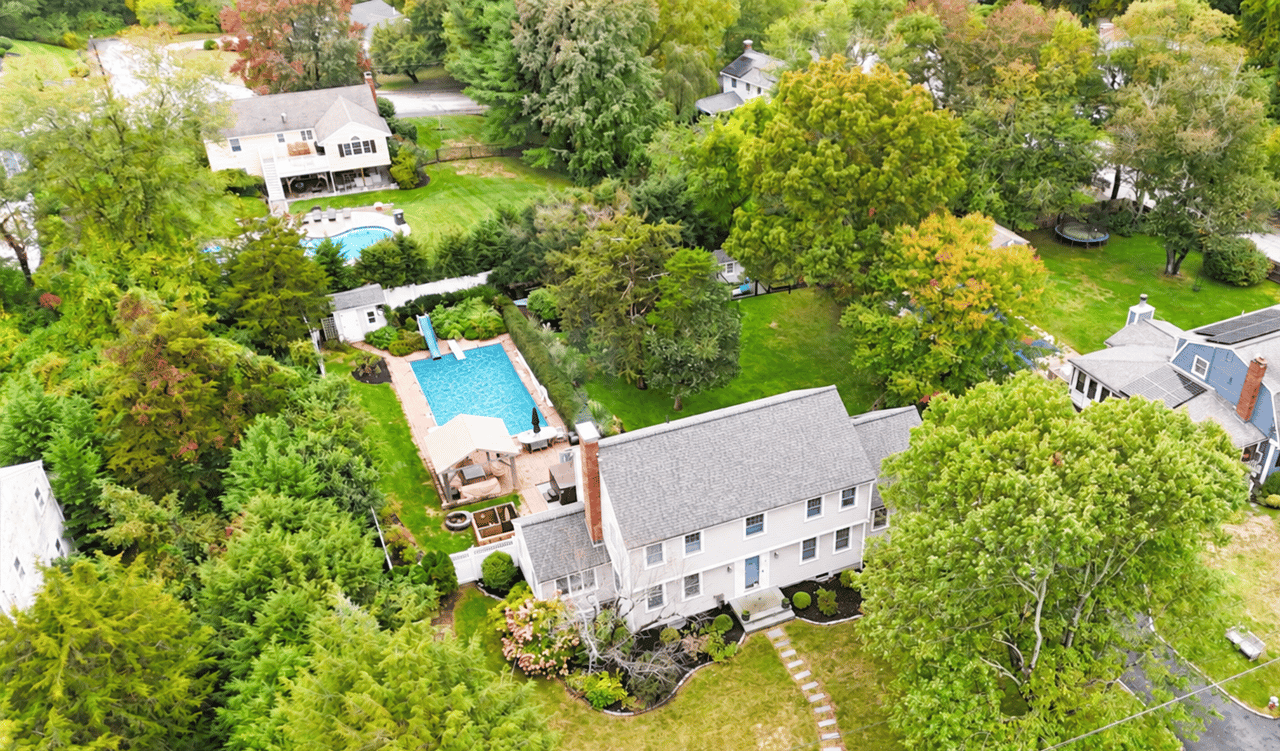
A substantial home. A larger lot. A pool. Outdoor living space. A finished lower level. Privacy. A great neighborhood. Strong schools. Recreation. A town center. Community.
That's an important distinction.
The buyer isn't simply comparing two houses.
They're comparing what kind of life those houses allow them to have.
And I've found that some buyers initially look at Medfield as the compromise.
Then they get here.
They spend some time in town. They see the schools. They experience the town center. They see the neighborhoods, parks and open space. They start understanding the community.
And suddenly it doesn't feel like the compromise anymore.
It feels like value.
Buyers Are Looking Farther West
There's a larger trend contributing to this as well.
As home prices have continued to rise in Boston and the communities closest to the city, buyers at virtually every price point have expanded their search farther west.
We've watched it happen for years.
A buyer who can't find what they want closer to Boston expands the radius.
That brings more people into communities like Medfield who may not have originally considered them.
And once they're here, the calculation changes.
But what does that additional distance buy you?
More land? More house? A pool? More privacy? A smaller community? A different lifestyle?
For some buyers, particularly those whose work schedules have become more flexible, that tradeoff makes a lot more sense today than it might have years ago.
Value Doesn't Mean Cheap
This is an important point.
With a median sale price now well over $1 million, nobody is going to call Medfield inexpensive.
That's not what I'm suggesting.
I'm talking about relative value.
There is a difference.
A household capable of buying a $3 million home doesn't necessarily want to spend $3 million on a house.
If that buyer can spend substantially less in Medfield and still get the home, schools, community, yard, recreation and lifestyle they're looking for, that's a very compelling proposition.
And I think that helps explain something that initially seems unusual about this new wealth ranking.
Maybe the value of Medfield's real estate is part of the reason so many high-income households want to live here in the first place.
What I've Seen From the Luxury Side of the Market
I've had an interesting perspective on this firsthand.
This year, I represented the seller of 6 Hale Place, which sold for $2.1 million, and represented the buyer of 15 Loeffler Lane, which sold for $1.98 million.
I've also spent roughly 20 years selling luxury properties throughout the surrounding communities.
What I've learned is that luxury buyers aren't simply chasing the biggest house or the most expensive ZIP code.
They're looking for a lifestyle.
Schools matter.
Community matters.
Location matters.
The house obviously matters.
But increasingly, value matters too—even to people who can afford to spend considerably more.
That's an important change.
What Does #9 Really Tell Us?
I don't think Medfield ranking as the ninth wealthiest community in Massachusetts means home prices are suddenly going to jump because a list came out.
Real estate doesn't work that way.
What I think it does is help explain something that's already been happening.
Medfield's median sale price has increased nearly 50% since 2020.
A $2 million market that barely existed a few years ago has become an established part of the market.
And the vast majority of those $2 million sales have been existing homes—not new construction.
At the same time, Medfield continues to offer something that's becoming increasingly difficult to find around Greater Boston:
A highly regarded school system, a real town center, a strong sense of community, recreation and open space, larger properties, and relative value compared with many neighboring luxury markets.
Put all of that together and the #9 ranking starts to make a lot more sense.
Medfield isn't becoming desirable because wealthy people live here.
High-income households are choosing to live here because Medfield has become an increasingly compelling place to live.
And after watching this market for the last 20 years, I think that's the more important story.
Whether you're considering a move to Medfield, thinking about selling, or simply want to understand what your property may be worth in today's market, I'm always happy to have the conversation.