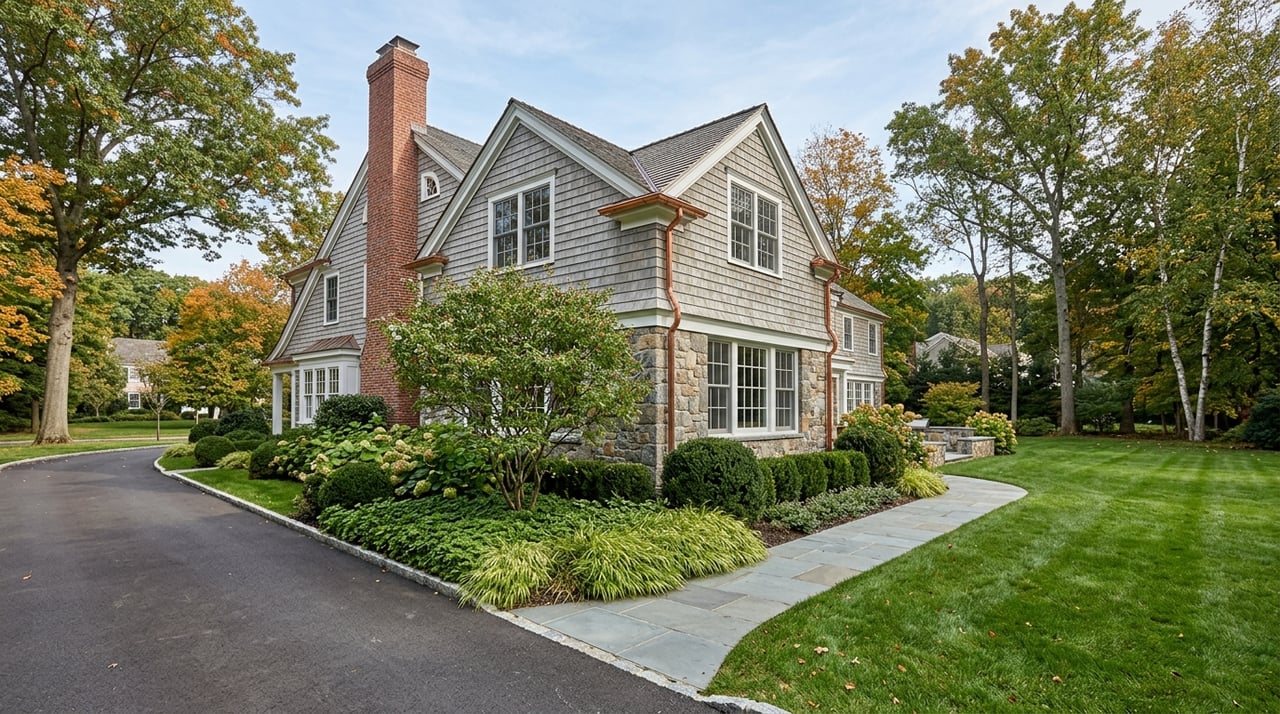
If you own an older home in Wellesley, you have probably asked a big question at least once: should you renovate what you have, or start over with a rebuild? It is a high-stakes decision, especially in a town where many homes were built before 1960 and replacement construction has been a meaningful part of the housing story for years. The good news is that the right path usually becomes clearer once you look at your lot, your timeline, and the local review process. Let’s dive in.
Why this decision is so common in Wellesley
Wellesley has an older housing stock, and that matters. The town’s June 2025 draft Strategic Housing Plan says 35% of homes were built in 1939 or earlier, and another 23% were built between 1940 and 1959.
That means many owners are not comparing two simple choices. You are often weighing the character and constraints of an older house against the cost, flexibility, and approval timeline of a replacement home.
This also plays out in a high-value market. The same town report notes a 2024 median single-family sale price of $2,103,500, and it says many newer single-family homes have come from teardowns rather than net-new supply.
Start with the lot, not the house
One of the biggest mistakes owners make is focusing only on the floor plan. In Wellesley, rebuild potential often depends just as much on the lot as the structure sitting on it.
The town’s residential zoning is organized around area-regulation districts. That means feasibility can turn on things like frontage, setbacks, height, and whether the property is on an adequate way.
For many lots, frontage is a major test. Depending on the district, minimum frontage can range from 75 feet to 200 feet, while side and rear yard requirements also vary by district.
Height matters too. While the general height limit is 45 feet or three stories, one-unit and two-unit dwellings and additions permitted on or after November 5, 1996 are limited to 36 feet.
When renovation often makes more sense
Renovation can be the stronger choice when your house has solid structural bones and your goals fit within the existing envelope. If you like your location, want to stay put, and do not need a dramatically different footprint, updating the current home may be the more practical move.
This can be especially true if your house is already nonconforming in some way. Wellesley allows many existing nonconforming one- and two-unit dwellings to be altered if the Zoning Board of Appeals finds the change does not intensify the nonconformity.
In plain terms, working with what is there can sometimes be easier than trying to replace it with something fully new. A rebuild may force you to meet current dimensional rules more directly, while a renovation may preserve some flexibility depending on the property’s status and the proposed design.
Renovation may also help you avoid certain delay risks. If the home is older, a teardown or extensive exterior removal could trigger demolition review, which can add time and uncertainty.
When rebuilding may be the better path
A rebuild can make sense when the existing house no longer works for modern living and the lot supports a compliant replacement. If the current layout is functionally obsolete, the systems are dated, and the changes you want are extensive, rebuilding may create a cleaner long-term solution.
This path tends to work best when the lot has adequate frontage, can satisfy setback and height limits, and does not have site issues that complicate approvals. It also helps if you are comfortable with a longer review and construction timeline.
Wellesley’s own housing analysis supports the idea that this is not unusual here. The town reports more than 1,200 single-family homes built between 2003 and 2025, with many of those being replacement homes.
In other words, rebuilding is already part of how owners in Wellesley adapt older properties to current needs. The question is not whether it happens. The question is whether your specific lot and goals support it.
The middle ground: major renovation or partial rebuild
Many owners hope a hybrid plan will be simpler. Sometimes it is, but not always.
A major addition, partial rebuild, or substantial exterior reworking can still trigger important reviews. In Wellesley, you cannot assume that keeping part of the house automatically avoids the same issues as a full teardown.
For example, the demolition review bylaw applies not only to full demolition in certain cases, but also when 50% or more of the exterior structure is removed or enclosed. A large addition can also trigger Large House Review if it pushes the home above the applicable threshold.
That is why the middle-ground option needs just as much early analysis as a full rebuild. It may preserve some parts of the home, but it is not automatically the faster or easier route.
Five local questions that usually decide it
Is the house pre-1950?
This is one of the first questions to ask in Wellesley. The demolition review bylaw applies to dwellings built on or before December 31, 1949 that were used as dwellings within the prior three years.
If you want to demolish the building, or remove or envelope 50% or more of the exterior structure, the Planning Department issues an eligibility notice first. The Historical Commission can then impose a 12-month demolition delay if the building is found to be preferably preserved.
For some owners, that risk alone makes renovation more attractive. For others, the added time is manageable if the rebuild outcome is worth it.
Is the property in a historic district or conservation district?
If your property is in one of Wellesley’s local historic districts, exterior changes require a certificate from the Historic District Commission. Interior work does not require that review.
Wellesley also has a neighborhood conservation district on Denton Road, where neighborhood-specific design guidelines apply. These layers do not automatically stop a project, but they can shape what is realistic and how long approvals may take.
Does the lot work for a new house?
This is where many rebuild ideas succeed or fail. A new one- or two-family dwelling, a reconstruction removing 50% or more of the existing footprint, or an addition increasing footprint by 50% or more needs Planning Board certification that the way is adequate.
The town states that a lot that does not abut an adequate way cannot obtain a building permit. So even if a concept looks great on paper, access and frontage may decide whether a rebuild is truly feasible.
Will the project trigger Large House Review?
Large House Review is a major checkpoint for both new homes and large additions. It applies when total living area plus garage space, or TLAG, exceeds district thresholds.
Those thresholds are 3,600 square feet in the 10,000-square-foot area district, 4,300 in the 15,000 district, 5,900 in the 20,000 district, and 7,200 in the 30,000- and 40,000-square-foot districts. In the General Residence District, the threshold is 3,600 square feet.
The town says this process normally takes about 3 to 4 months and involves the Planning Board, Design Review Board, and Engineering Division. If your goals push the home over the threshold, timeline expectations should change right away.
Are there wetlands, floodplain, or tree issues?
Site conditions can change everything. Wellesley says work in wetlands, floodplains, and buffer areas within 100 feet of wetlands or 200 feet of perennial streams needs a Wetlands Protection Committee permit.
The town also updated its floodplain district and FEMA flood maps effective July 8, 2025. On top of that, significant demolition or development activity may need tree protection and mitigation planning.
These issues do not always rule out a project, but they can add design constraints, review time, and cost. That is why site analysis matters early.
A practical way to compare your options
If you are deciding between renovate or rebuild in Wellesley, it helps to compare the paths side by side.
| Decision Factor | Renovate | Rebuild |
|---|---|---|
| Existing layout | Works reasonably well with updates | No longer fits your needs |
| Nonconforming status | May preserve flexibility for alterations | New home must be tested against current rules |
| Demolition delay risk | Often lower if exterior removal stays limited | Higher if the house is subject to demolition review |
| Timeline | Can be shorter if reviews are limited | Often longer due to multiple approvals |
| Lot dependency | Important, but existing structure may help | Critical, especially frontage, setbacks, and adequate way |
| Design freedom | More constrained by current structure | Greater flexibility if the lot supports it |
This is where a clear property-by-property strategy matters. Two homes on similar streets can have very different outcomes based on age, district, frontage, and site conditions.
Why timing and resale still matter
This decision is not only about construction. It is also about your long-term ownership plan and the future market position of the property.
In Wellesley, where many properties are high-value single-family homes and owner occupancy is strong, updates and rebuilds are often tied to long-term use rather than short-term turnover. That makes it even more important to choose the path that aligns with how you want to live and what the lot can reasonably support.
If resale is part of the equation, the final product matters. A thoughtful renovation can preserve character and improve function, while a well-planned rebuild can deliver a fully modern home if local rules support the vision.
The smartest first step
Before you commit to plans or budgets, gather the facts that usually control the outcome. In Wellesley, that means confirming the home’s age, zoning district, frontage, adequate-way status, possible nonconforming issues, Large House Review thresholds, and any wetlands, floodplain, or historic review layers.
Once those answers are on the table, the renovate-versus-rebuild decision becomes much less emotional and much more strategic. You can compare timeline, cost, design flexibility, and likely resale appeal with a clearer view of what is truly possible.
If you are weighing whether to renovate, expand, or rebuild in Wellesley, we can help you think through the property’s market context and next steps. For a local, high-touch conversation, The Walsh Team Partners offers complimentary consultations.
FAQs
What makes rebuilding difficult on some Wellesley lots?
- Rebuilds can be limited by frontage, setbacks, height rules, adequate-way requirements, wetlands or floodplain conditions, and reviews like Large House Review or demolition review.
What is Wellesley Large House Review?
- Large House Review is a local review process for new homes and certain additions when total living area plus garage space exceeds district thresholds, and the town says it usually takes about 3 to 4 months.
What is the Wellesley demolition delay bylaw?
- For certain dwellings built on or before December 31, 1949, demolition or removal or enclosing of 50% or more of the exterior structure can trigger review, and the Historical Commission may impose a 12-month delay if the building is found preferably preserved.
Can a major addition trigger the same reviews as a teardown in Wellesley?
- Yes. Depending on the scope, a major addition or partial rebuild can still trigger demolition review, Large House Review, adequate-way certification, or review of nonconforming conditions.
When does renovation usually make more sense in Wellesley?
- Renovation often makes more sense when the house has good structural bones, your goals fit within the existing envelope, and you want to reduce the risk of a longer approval process tied to teardown or major exterior change.
How can you start evaluating a renovate-or-rebuild decision in Wellesley?
- Start by confirming the home’s age, zoning district, frontage, adequate-way status, possible historic or conservation district review, Large House Review thresholds, and any wetlands, floodplain, or tree-related constraints.