Dover MA Real Estate • Luxury Estates • Buyer Perspective
What Makes a Dover Estate Truly Irreplaceable?
A buyer’s agent perspective on Windover, the restoration, craftsmanship, land, and legacy behind one of Dover’s most significant estate offerings.
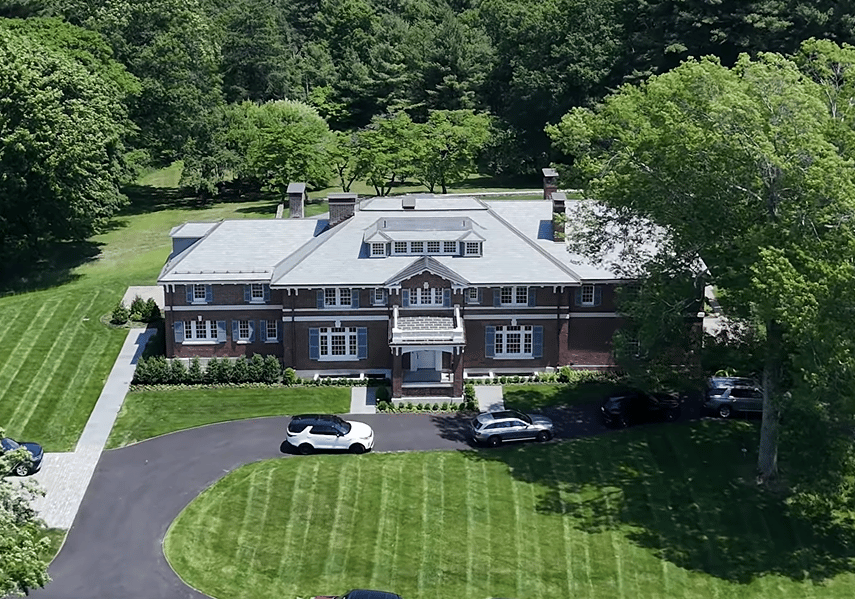
Aerial tour of Windover at 15 Farm Street in Dover, Massachusetts.

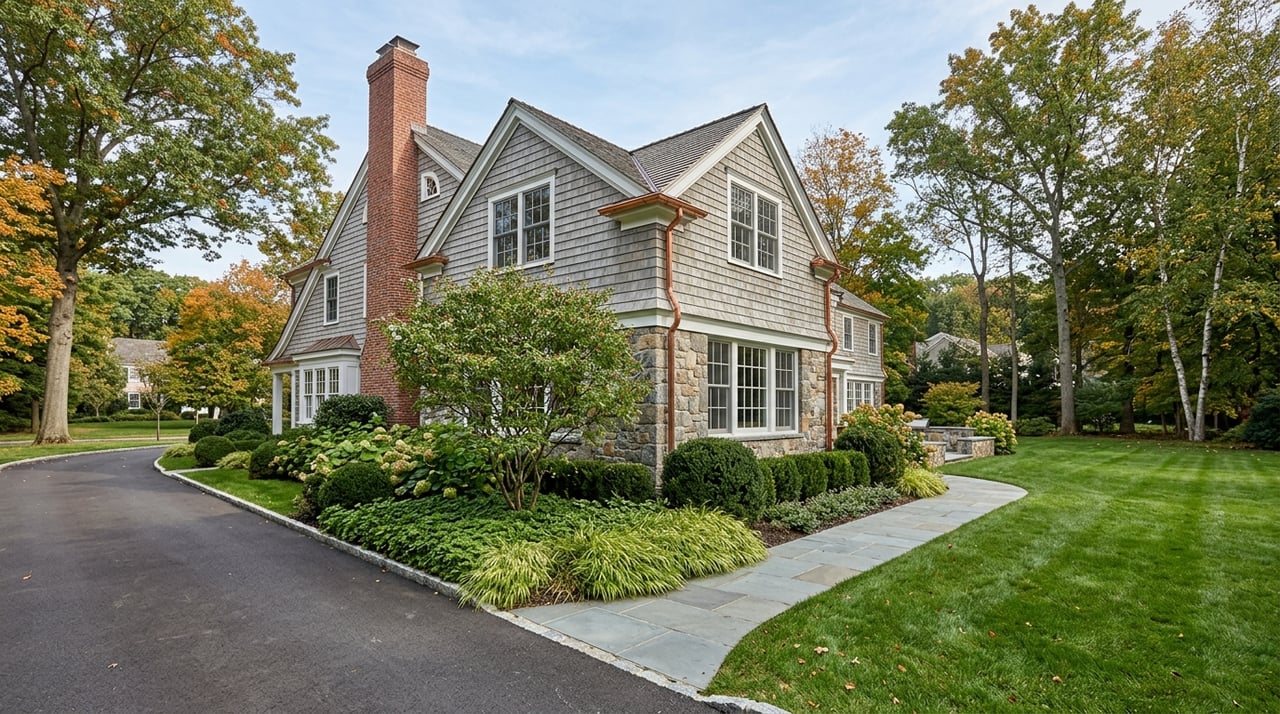
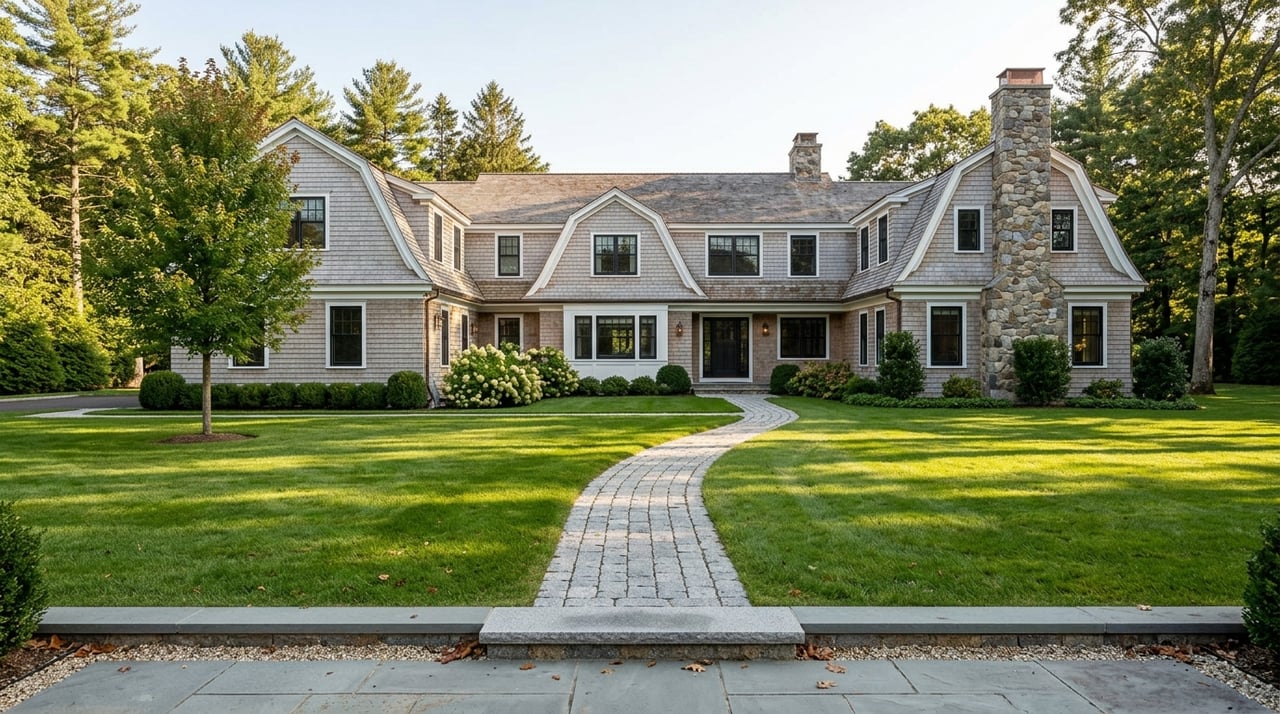
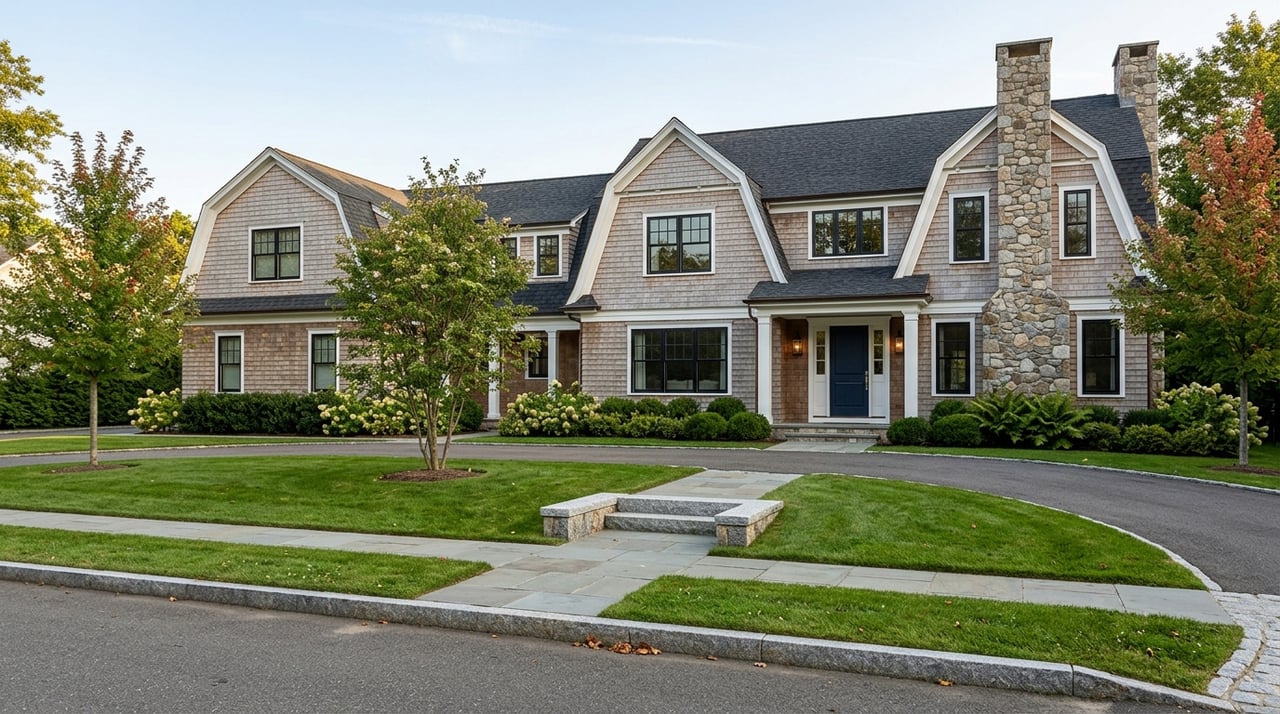
Windover is not simply a luxury home. It is a restored Dover estate where architecture, land, craftsmanship, privacy, infrastructure, and long-term scarcity all come together. I recently had the privilege of touring Campion & Company’s listing at 15 Farm Street, and I am featuring it from a buyer-agent perspective to help sophisticated buyers understand what makes an offering like this so difficult to replicate.
Most luxury homes are purchased.
A select few are stewarded.
Windover feels closer to the second category.
I recently had the privilege of touring Windover, Campion & Company Fine Homes Real Estate’s extraordinary listing at 15 Farm Street in Dover, Massachusetts.
As someone who grew up in Dover, graduated from Dover-Sherborn, and has spent nearly two decades helping buyers and sellers navigate this remarkable community, I approached the property from a buyer’s perspective.
The first thing that struck me wasn’t the scale.
It wasn’t the acreage.
It wasn’t even the extraordinary setting overlooking Fuller Pond.
It was the quality of the restoration.
“At a time when many luxury properties are built to impress in photographs, Windover stands apart because of what has been preserved, what has been restored, and what has been thoughtfully modernized behind the walls.”
Before going any further, credit belongs to the team responsible for bringing this extraordinary estate to its current form.
The property is represented by Campion & Company Fine Homes Real Estate, whose marketing has introduced Windover to a broader audience. Equally impressive is the work completed by Brookes + Hill Custom Builders, whose restoration and re-imagining of the estate appears to have been guided by a deep respect for craftsmanship, architectural integrity, and long-term stewardship.
This article is not intended to market the property.
The listing already does that exceptionally well.
Instead, I want to share how I evaluate a property of this caliber when representing a buyer and why opportunities like Windover are becoming increasingly difficult to replicate.
The First Question I Ask
When evaluating a significant estate property, sophisticated buyers often begin by asking whether a property is worth the asking price.
I think there is a more useful question.
Could this property realistically be recreated today?
Not simply rebuilt.
Recreated.
Land of this scale on one of Dover’s most desirable roads is increasingly scarce. The permitting environment is different than it was decades ago. Construction costs continue to rise. Skilled craftsmen capable of executing historically sensitive restoration work are increasingly difficult to find.
Then there is time. Even with significant resources, recreating a property like Windover would likely require years of planning, design, approvals, construction, and landscaping before achieving anything close to what exists today.
True estate value is often found in the things that cannot easily be replicated: land, privacy, architecture, restoration quality, mature grounds, and long-term scarcity.
The Hidden Value Most Buyers Never See
Most visitors will naturally focus on the visible features.
The kitchen.
The entertaining spaces.
The pool.
The terraces.
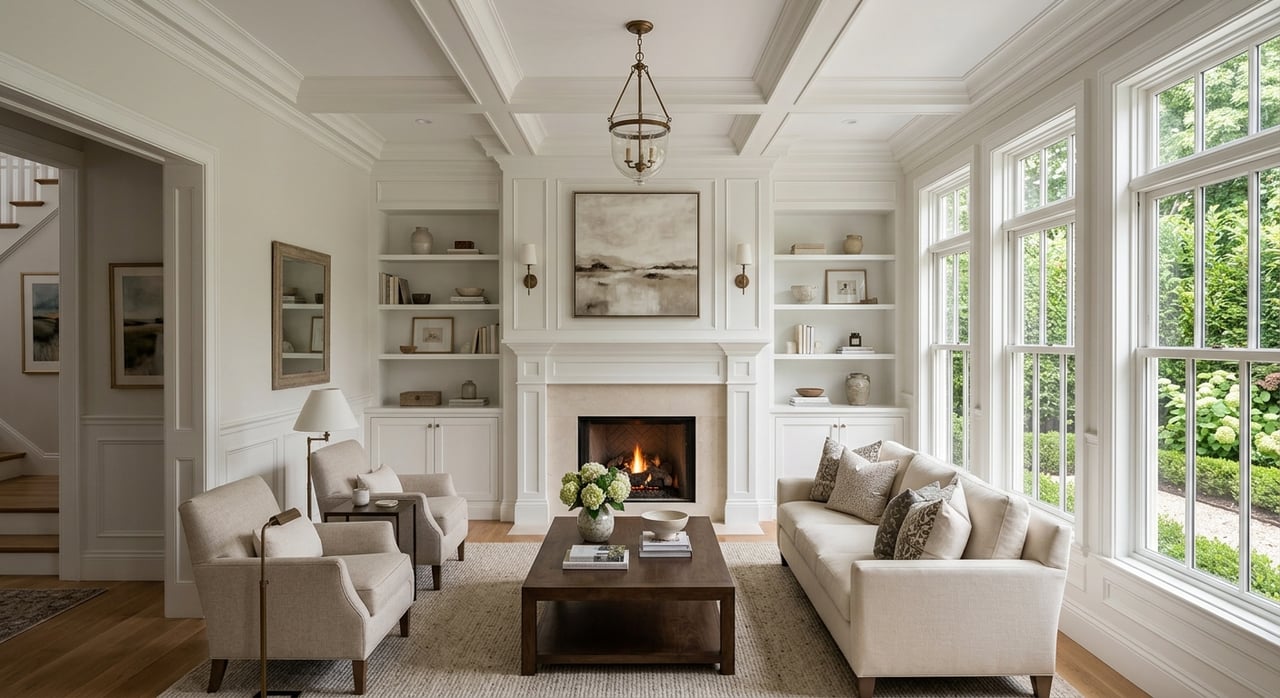
The beautifully restored interiors.
Experienced buyers tend to spend equal time thinking about what they cannot see.
One of the most impressive aspects of Windover is the extraordinary investment that has occurred behind the walls. The restoration included significant infrastructure upgrades, modern mechanical systems, geothermal heating and cooling, upgraded electrical service, new plumbing, security systems, fire protection systems, and extensive modernization throughout the estate.
Those improvements rarely make magazine covers. They also represent some of the most important investments in the property.
“The best luxury homes are not simply beautiful. They function beautifully as well.”
The Difference Between Renovation and Stewardship
There is an important distinction between a renovation and a stewardship project.
A renovation changes a property.
A stewardship project protects what makes it special while carefully preparing it for the future.
That distinction became increasingly apparent as I toured Windover.
The team behind the restoration appears to have approached the property with remarkable discipline. Original architectural character has been preserved while modern systems, comfort, and functionality have been integrated in a way that feels natural rather than forced.
The best estate restorations do not announce themselves.
They feel timeless.
Windover succeeds because it feels neither frozen in the past nor disconnected from it. That is an incredibly difficult balance to achieve.
The Room That Stayed With Me
Ironically, the room that left the strongest impression on me wasn’t the kitchen, the primary suite, or even the extraordinary grounds.
It was the ballroom.
Historically, a room like this might have been reserved for formal entertaining. Today, it feels entirely different.
During my tour, it felt less like a traditional ballroom and more like an elegant English country estate garden room seamlessly connected to the landscape beyond. Exposed timber beams stretch across the ceiling while oversized arched doors open directly to the terraces and gardens outside. With natural light pouring through the windows and views of the surrounding grounds in nearly every direction, the room possesses a warmth and informality that is difficult to fully appreciate through photographs alone.
In many estate homes, formal rooms can feel disconnected from everyday living.
This room feels like the opposite.
You can easily imagine hosting a summer dinner party with the doors open to the gardens, gathering with family after an afternoon by the pool, or simply enjoying a quiet evening while the landscape becomes part of the experience.
To me, it perfectly captures what makes Windover so compelling.
The estate honors its history without feeling trapped by it.
Rather than preserving rooms as relics of another era, the restoration has allowed them to evolve for the way people actually live today.
Of all the spaces on the property, this was the one I kept coming back to.
What the Floor Plans Reveal
Having reviewed the floor plans and specifications, one of the most impressive aspects of Windover is how thoughtfully the estate functions beyond what buyers see in the photographs.
The floor plans reveal a level of intentionality that is increasingly rare.
Private offices are integrated into the living environment rather than added as an afterthought. Guest accommodations are thoughtfully separated from primary family spaces. Wellness, recreation, and creative pursuits have dedicated areas that feel purpose-built rather than opportunistic.
The lower level alone functions more like a private club than a traditional basement, incorporating fitness, wellness, recreation, and studio space while remaining connected to the larger estate experience.
The result is a property that supports both grand-scale entertaining and everyday living with equal success.
Scarcity Creates Value
One additional aspect of the offering deserves mention, not because it defines Windover, but because it adds a layer of flexibility that is increasingly difficult to find.
Included in the sale is 17 Farm Street, a separate parcel improved by a Colonial residence, riding ring, and six-stall barn.
While Windover itself is unquestionably the focal point, the inclusion of this additional property quietly enhances the overall offering. The additional residence, acreage, and equestrian improvements provide a degree of flexibility rarely associated with estate properties today, adding options for future use without distracting from what makes Windover so special in the first place.
Sophisticated buyers often place a premium on flexibility. This is one more example of how Windover distinguishes itself from a typical luxury property.
A Credit to the Team Behind the Transformation
Great estate properties rarely happen because of one person.
They require vision.
They require patience.
They require extraordinary craftsmanship.
Windover reflects the work of a team that clearly understood the importance of preserving architectural identity while modernizing the estate for contemporary living.
Campion & Company Fine Homes Real Estate deserves credit for presenting the property to the market with the level of care an offering of this significance requires.
Brookes + Hill Custom Builders deserves recognition for the restoration and re-imagining of the estate. Their work appears to reflect the difference between improving a property and stewarding one.
The plans also identify Mellowes & Paladino Architects as part of the architectural documentation, and the specifications reference LeBlanc Jones Landscape Architects for the professional landscape design.
That kind of collaboration matters. At this level, the final result is only as strong as the team behind it.
My Dover Perspective
Having grown up in Dover and later representing the sale of 18 Walpole Street at $13.25 million, the highest publicly offered residential sale in town history, I’ve learned that truly significant estate properties share certain characteristics.
They’re rarely defined by square footage alone.
They’re defined by land.
Privacy.
Stewardship.
Permanence.
And increasingly, scarcity.
The greatest luxury Dover offers has never been found inside any one house.
It’s found in the conservation land, trails, schools, privacy, and sense of community that have made the town one of New England’s most desirable places to live for generations.
Properties like Windover simply express those qualities at the highest level.
“Luxury homes come to market every year. Estate properties of this significance do not.”
The Bottom Line
Windover is not remarkable because it is large.
It is remarkable because it would be extraordinarily difficult to recreate.
That distinction matters.
The combination of location, land, architectural character, restoration quality, modern infrastructure, privacy, and future flexibility creates an offering that is increasingly rare throughout Greater Boston.
For buyers who understand that distinction, Windover deserves careful, thoughtful consideration.
Evan Walsh • Dover, Massachusetts
Evan Walsh leads The Walsh Team at William Raveis Real Estate and advises buyers and sellers across Dover, Sherborn, Wellesley, Weston, Needham, Medfield, Westwood, Natick, Sudbury, Wayland, and the surrounding MetroWest communities.
As a Dover native and Dover-Sherborn graduate, Evan brings a deeply local perspective to significant estate properties, luxury buyer representation, and the long-term value drivers that shape the upper end of the market.
If you are considering Windover or another significant estate property in Dover, Evan can help you evaluate the opportunity with local insight and a buyer-focused strategy.
Interested in Learning More About Windover?
Having toured the property and reviewed the restoration specifications and architectural plans, I would be happy to share my observations from a buyer’s perspective.
Detailed floor plans, specifications, restoration documentation, and supplemental estate information are available following a confidential buyer consultation and qualification process.